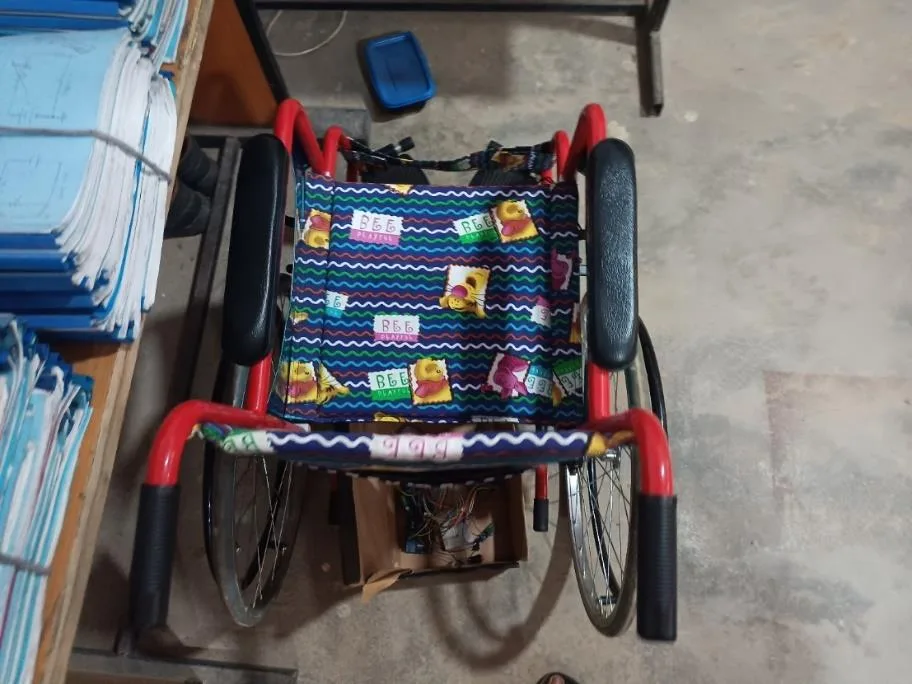
Powered wheelchairs are expensive, and a joystick alone doesn't suit every child. Could we turn an ordinary manual chair into a powered one, controlled by voice or joystick, using parts we could buy locally?
The goal was a low-cost retrofit for children with motor impairments: two ways to drive, no internet needed to send commands, and a build that a local workshop could repeat.
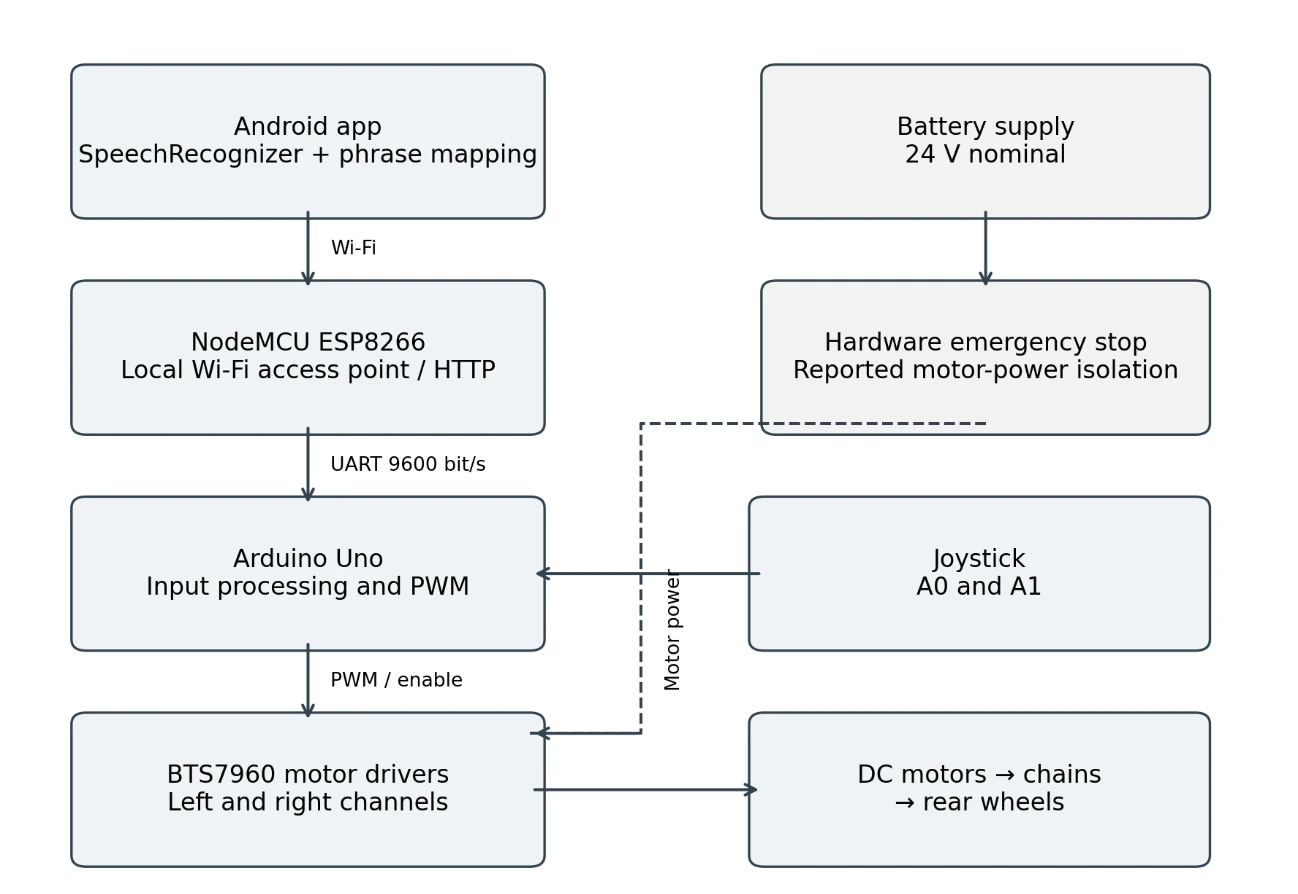
You press Speak in the Android app and say a command: power on, forward, backward, left, right, stop or power off. The app matches the phrase and sends it over the chair's own Wi-Fi hotspot to a NodeMCU, which passes it to an Arduino. The Arduino also reads the joystick, then ramps both motors smoothly through two motor drivers.
- Android appMIT App Inventor speech recogniser maps phrases to seven commands
- NodeMCU ESP8266Runs its own Wi-Fi hotspot and passes commands on over serial
- Arduino UnoReads the joystick, takes voice commands and ramps the motor PWM
- 2 × BTS7960Left and right motor drivers
- 2 × 350 W DC gear motorsChain and sprocket drive to the rear wheels
- 24 V batteryTwo 12 V batteries in series, with a hardware emergency stop
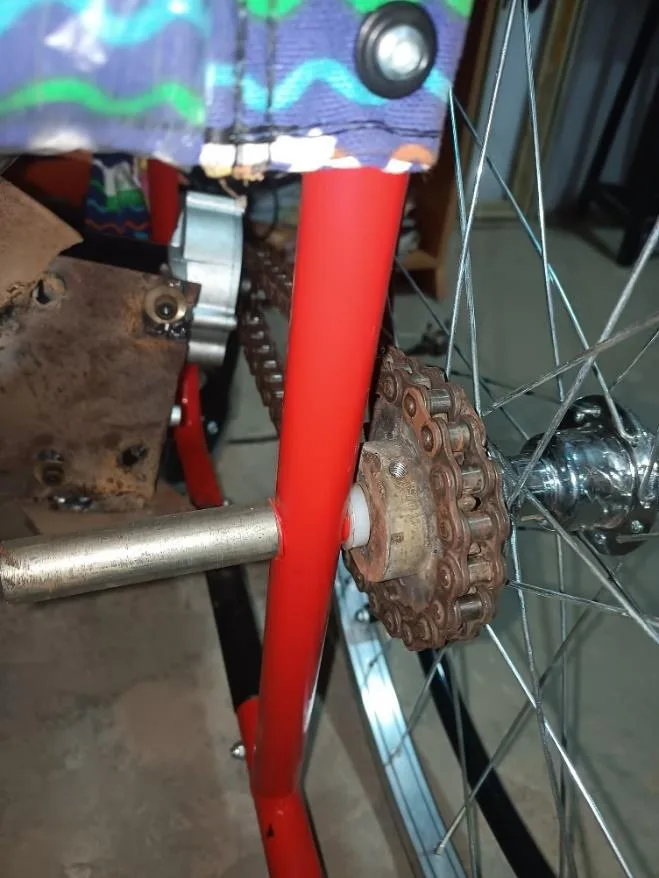
The hardest part wasn't the code. On the first test the motor shaft spun but the wheel didn't, and the chain kept jumping off the sprocket.
We fixed the coupling between wheel and shaft, realigned the sprockets and set the chain tension. All of it was done in a workshop with locally sourced parts, for a bill of materials of ₦597,900.
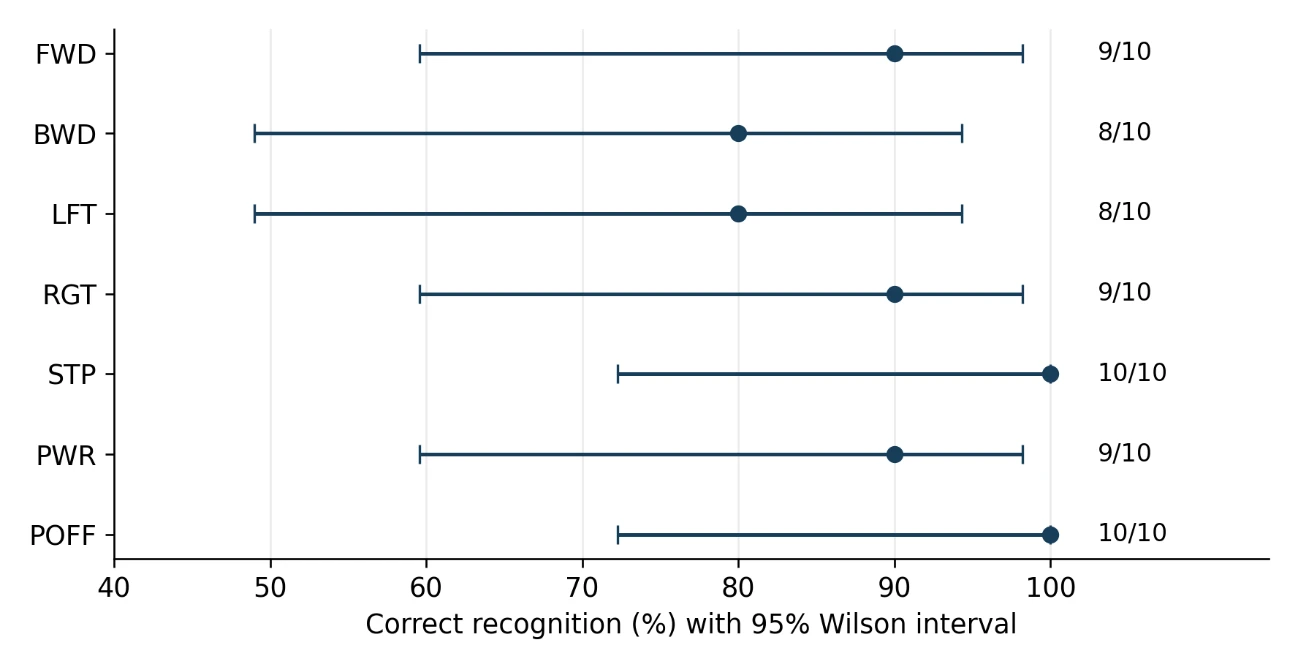
“Stop” and “power off”, the commands that matter most for safety, were recognised every time.
The paper is honest about the limits: this shows the retrofit is feasible, not that it's ready for children to use. Reviewing the code for publication turned up the work left to do.
- Give the joystick real priority: reject directional voice commands while the stick is in use, keep “stop” always available.
- Restore reverse on the left wheel so the chair backs up straight.
- Add a short communication timeout so a dropped Wi-Fi link stops the chair.
- Test with load, measure battery current and runtime, and log a full confusion matrix for voice commands.
Retrofitting a manual wheelchair with hybrid voice and joystick control for paediatric mobility.
Akinwande, D. O., Ajibade, P. T., Abiola, J. O., Iriaye, F. E., & Ajewole, O. K. (2026). Retrofitting a manual wheelchair with hybrid voice and joystick control for paediatric mobility. Nigerian Journal of Applied Science and Innovative Technology (NiJASIT), 2(3), 403–417.